All Locations: Humanitz Guide
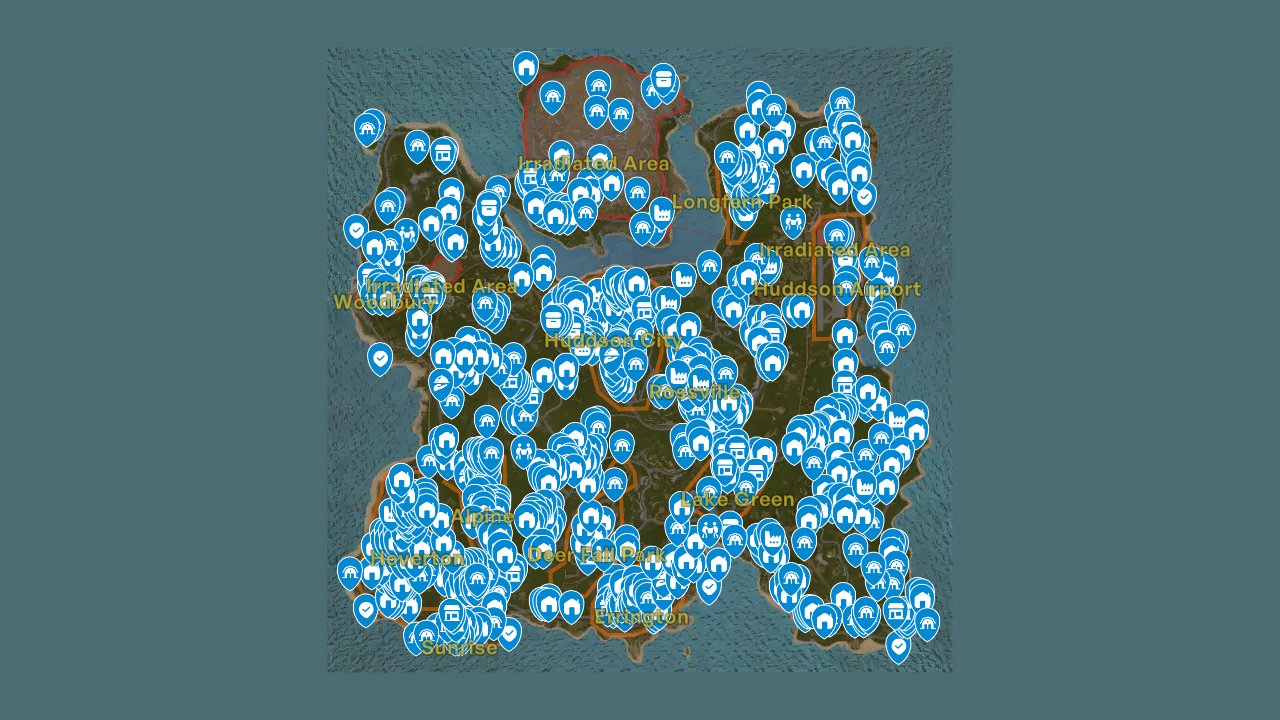
Locations in Humanitz represent the key structures and points of interest that define your survival experience across the game world. These markers highlight everything from your initial spawn points to the various buildings and facilities you’ll need to scavenge, fortify, or avoid as you navigate the post-apocalyptic landscape.
The Humanitz Interactive Map filters these location markers to help you plan efficient routes between essential structures, whether you’re searching for supplies, establishing a base, or simply trying to understand the layout of each area. Each location type serves a distinct purpose in your survival strategy.

What Locations Are Used For
Locations form the backbone of your survival operations in Humanitz, providing access to resources, shelter, and strategic positioning across the map. Understanding where each type of structure appears helps you make informed decisions about movement and resource allocation.
- Establishing spawn points and respawn locations for character deployment
- Securing shelter and defensible positions in houses and buildings
- Gathering essential supplies from containers and commercial structures
- Accessing fuel and vehicle maintenance at gas stations
- Finding larger communities and survivor bases for trading or conflict
Locations Types
The map categorizes locations into nine distinct types, each serving different functions in your survival journey. From basic spawn points to complex industrial facilities, these markers help you identify the most relevant structures for your current objectives.
Spawn Point
These markers indicate where players initially enter the game world or can respawn after death. Spawn points are crucial for understanding safe entry zones and planning your initial movement patterns when starting fresh.
House
Residential structures that often contain basic supplies, furniture, and potential shelter opportunities. Houses typically offer modest loot spawns and can serve as temporary safe havens or storage locations for smaller groups.
Containers
Shipping containers and storage units that frequently hold valuable resources and equipment. These locations are prime scavenging targets, often containing tools, food, or materials needed for crafting and survival.
Gas Station
Fuel stations that provide access to gasoline and vehicle maintenance supplies. Gas stations are essential stops for players using vehicles and often contain additional convenience store items and basic supplies.
Commercial Building
Larger retail and business structures that typically offer diverse loot pools and more substantial storage space. These buildings often require more time to search thoroughly but reward players with higher-quality items and resources.
Community
Established settlements or neighborhoods with multiple structures and potential NPC interactions. Communities represent larger, more complex areas that may offer trading opportunities or present significant threats from other players.
Restaurants and Hospitality
Dining establishments, hotels, and service buildings that specialize in food, cooking supplies, and hospitality items. These locations are particularly valuable for players focused on sustaining themselves or their group over longer periods.
Industrial
Manufacturing facilities, warehouses, and heavy industry locations that contain specialized equipment and raw materials. Industrial sites often hold the most valuable crafting components but may present higher risks due to their strategic importance.
Survivor Base
Fortified positions established by other players or NPCs, representing the most dangerous but potentially rewarding locations. Survivor bases may contain the best equipment but require careful approach and strong combat preparation.
How to Use the Map Efficiently
Planning your movement between locations requires balancing risk, reward, and travel time to maximize your survival efficiency.
- Start near spawn points and work outward in expanding circles to maintain escape routes
- Prioritize houses and containers for basic supplies before attempting higher-risk locations
- Plan routes that connect gas stations when using vehicles for extended scavenging runs
- Scout communities and survivor bases from a distance before committing to approach
- Use industrial locations as late-game objectives once you have proper equipment and backup plans
- Group restaurants and commercial buildings together for efficient food and supply gathering
Locations Locations Table
Here’s a breakdown of each location type and what you can expect to find:
| Type | Primary Resources | Risk Level |
|---|---|---|
| Spawn Point | Starting gear, safe zone access | None |
| House | Basic supplies, shelter materials | Low |
| Containers | Tools, equipment, crafting materials | Low to Medium |
| Gas Station | Fuel, vehicle supplies, snacks | Medium |
| Commercial Building | Diverse loot, quality items | Medium |
| Community | Trading opportunities, varied resources | Medium to High |
| Restaurants and Hospitality | Food, cooking supplies, medical items | Medium |
| Industrial | Advanced materials, heavy equipment | High |
| Survivor Base | Top-tier gear, weapons, fortifications | Very High |
Tips for Locations Hunting
- Always check spawn points for recently dropped loot from other players
- Search houses systematically, checking every room and storage container
- Approach gas stations carefully as they’re common ambush points for hostile players
- Use industrial locations during off-peak hours to avoid competition
- Mark survivor bases you discover but wait to attack until you have proper equipment
- Combine restaurant raids with nearby commercial buildings for maximum efficiency
FAQs
Do locations respawn loot after being looted?
Most locations have loot respawn timers, but the exact duration varies by server settings and location type. Industrial and survivor bases typically have longer respawn times than houses and containers.
Can I build structures at any location type?
Building restrictions vary by server configuration, but most servers allow construction near houses and open areas while restricting building at spawn points, gas stations, and established communities.
Which locations are safest for new players?
Houses and containers offer the safest starting points for new players, as they typically contain basic supplies without attracting as much attention from other players as gas stations or industrial sites.
How do I identify if a survivor base is active?
Look for signs of recent activity like fresh construction, vehicles nearby, or defensive preparations. Active bases often have players logged off inside, so approach with extreme caution and proper equipment.
Credit: Humanitz by Wand