American Truck Simulator: All Facility Locations
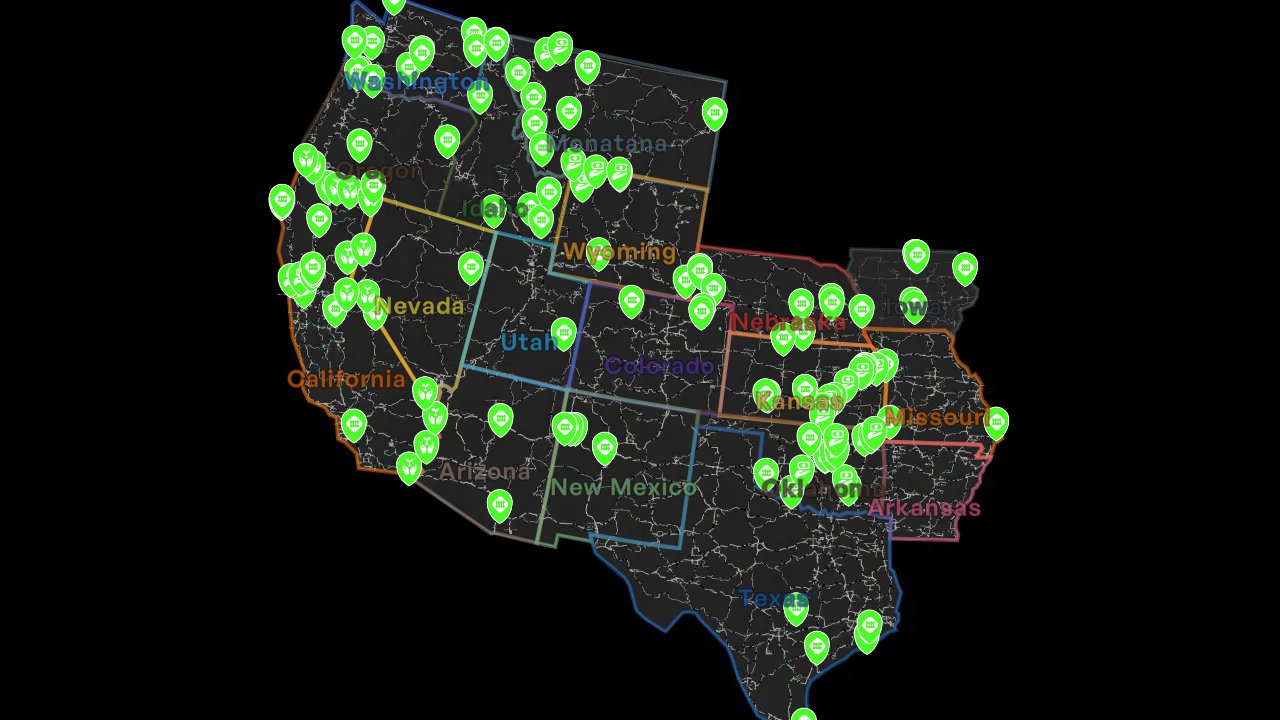
Facilities in American Truck Simulator represent critical infrastructure elements that directly impact your trucking experience across the highway system. These markers help you anticipate mandatory stops, toll payments, and regulatory checkpoints that can affect route timing and fuel costs.
The American Truck Simulator Interactive Map with Facilities filtering lets you plan routes around these infrastructure points, avoiding unexpected delays and budgeting for toll expenses. Understanding facility locations becomes essential for efficient long-haul planning and maintaining realistic driving schedules.

What Facilities Are Used For
Facilities serve as regulatory and infrastructure checkpoints that truckers must navigate during cargo deliveries. These locations can impact delivery schedules, operating costs, and route selection across different states.
- Agricultural inspections verify cargo compliance when crossing state borders with certain loads
- Toll gates require payment for highway access, affecting profit margins on specific routes
- Railroad crossings create potential traffic delays that impact delivery timing
- Route planning around facilities helps maintain realistic delivery schedules
- Avoiding unnecessary facility encounters can reduce operational costs and travel time
Facilities Types
The map categorizes facilities into three distinct types that represent different aspects of highway infrastructure and regulatory requirements.
Agricultural Inspection
Agricultural inspection stations appear at state borders where authorities check certain cargo types for compliance with agricultural regulations. These mandatory stops can add time to deliveries involving agricultural products or when crossing specific state lines. Planning routes with these inspections in mind helps maintain accurate delivery estimates.
Toll Gate
Toll gates require payment for highway access and represent a direct operational cost for truckers. Different states implement varying toll structures, from flat fees to distance-based charges. Identifying toll locations beforehand allows for better route cost analysis and profit calculations.
Railroad Crossing
Railroad crossings mark locations where freight trains intersect highway routes, creating potential traffic delays. While not all crossings cause delays simultaneously, knowing their locations helps anticipate possible schedule disruptions. These crossings are particularly relevant for time-sensitive deliveries where every minute counts.
How to Use the Map Efficiently
Strategic facility planning involves identifying potential bottlenecks and cost centers before committing to specific cargo routes.
- Check agricultural inspection locations when planning routes with farm-based cargo deliveries
- Calculate toll costs by identifying all toll gates along potential routes before accepting contracts
- Plan alternative routes around multiple railroad crossings for time-critical deliveries
- Cross-reference facility locations with fuel stops to minimize unnecessary detours
- Consider facility density when choosing between interstate highways and regional roads
- Use facility information to set realistic delivery time estimates for contract bidding
Facilities Locations Table
Each facility type serves a specific function in the trucking simulation experience.
| Type | What You Get | Notable Detail |
|---|---|---|
| Agricultural Inspection | Cargo compliance verification | Mandatory stops at state borders |
| Toll Gate | Highway access payment | Direct operational cost impact |
| Railroad Crossing | Potential traffic delays | Variable timing disruptions |
Tips for Facilities Hunting
- Focus on major interstate junctions where multiple facility types often cluster together
- Check border areas between agricultural states for inspection station concentrations
- Identify toll-heavy corridors like the East Coast to factor costs into route selection
- Look for railroad crossing patterns near industrial areas and major freight hubs
- Use facility locations to plan fuel stops and rest breaks at strategic intervals
- Consider facility timing when scheduling deliveries during peak traffic hours
FAQs
Do all agricultural inspections cause delays in American Truck Simulator?
Agricultural inspections are mandatory stops that add time to your route, but the delay duration varies based on cargo type and crossing location. Planning for these stops helps maintain realistic delivery schedules.
How much do toll gates typically cost in the game?
Toll costs vary by location and are automatically deducted from your earnings. Identifying toll locations beforehand helps calculate net profit margins for different route options.
Can railroad crossings be avoided completely?
Railroad crossings are part of the realistic highway system, but alternative routes often exist. The map helps identify crossing locations so you can plan routes that minimize potential train delays.
Do facilities affect gameplay beyond time and money?
Facilities primarily impact delivery timing and operational costs, but they also contribute to the realistic trucking simulation experience by replicating real-world highway infrastructure challenges.
Credit: American Truck Simulator by Wand