Hollow Knight Interactive Map
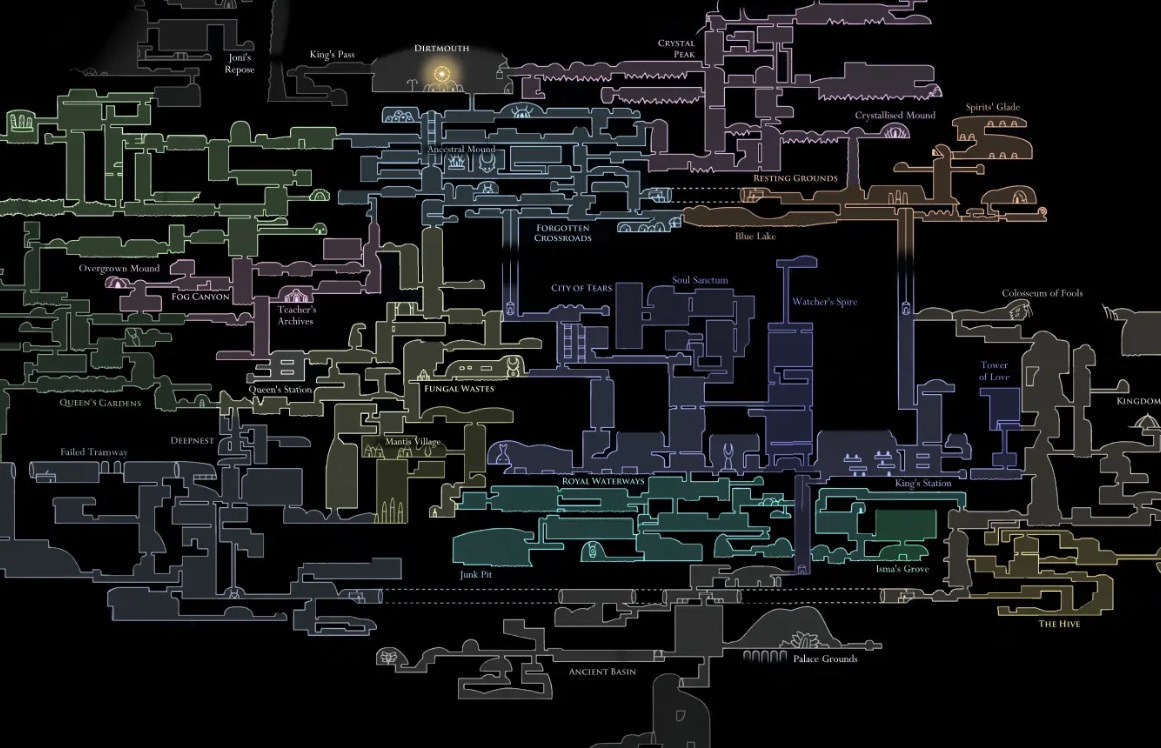
Hollownest is a crumbling underground kingdom built on deliberate disorientation – interconnected regions that fold back on themselves, locked behind abilities you have not yet earned and shortcuts you have not yet found. Tracking down every Bench, shade gate, and hidden lore tablet across areas like the Forgotten Crossroads, Fungal Wastes, City of Tears, and the Royal Waterways is exactly where a solid Hollow Knight Map becomes essential, letting you shift from aimless wandering to deliberate, confident exploration.
Progress in Hollownest is never linear. Movement abilities open previously impassable routes, fast travel points reshape how regions connect, and bosses gate entire sections of the kingdom until you are ready to face them. Charms, collectibles, and story fragments are scattered across all of it – from the depths of the Ancient Basin to the heights of the Crystal Peak – so understanding how each zone links to the next saves real time and reduces backtracking.
Using this Hollow Knight Map as a reference means you can cross-check boss locations, collectible spots, and shortcut positions without breaking the flow of a run. Whether you are chasing a full completion or just trying to remember where that locked door was, the map covers every major region and points of interest inside each one.

How to Use the Hollownest Map
- Arsenal includes Abilities, Charms, Nail Arts, Spells, and Charm Notches
- Hostiles include Bosses, Dream Bosses, and Warrior’s Dream encounters
- Items include Keys, Pale Ore, Rancid Eggs, Relics, and other unique items
- Locations include Benches, Fast Travel points, Hot Springs, Locked Doors, Shade Gates, Vendors, Shortcuts, Starting Location, and Miscellaneous landmarks
- Points of Interest include Chests, Geo Deposits, Grubs, Lifeblood Cocoons, Soul Totems, Whispering Roots, Journal Entries, and Grimmkin Flames
- Story includes Dreamers, Quest Items, Lore Tablets, NPCs, and Side Quests
- Upgrades include Mask Shards and Vessel Fragments
What the Map Can Do
Making Sense of Nonlinear Progression
Hollow Knight is all about freedom, but that freedom can feel overwhelming. The Hollow Knight Map helps you understand how progression actually works. Abilities and Spells unlock access to new routes, while Shade Gates and Locked Doors act as long-term barriers you’ll return to later. Shortcuts quietly stitch regions together, turning long, dangerous routes into manageable loops once discovered.
Benches and Hot Springs mark safe zones and recovery points, which become incredibly important during deeper exploration. Fast Travel nodes highlight how the world slowly opens up, reducing travel time as you push farther from the starting areas. Seeing all of these together helps you decide where to explore next without losing momentum.
Bosses, Charms, and Build Planning
Combat progression in Hollow Knight is tightly tied to Charms, Nail upgrades, and boss encounters. Boss and Dream Boss placements show clear difficulty spikes, often guarding powerful rewards or key story moments. Warrior’s Dream encounters add another layer, tying optional challenges to upgrades and lore.
Charms and Charm Notches define playstyle. Some areas reward aggressive spell-focused builds, while others favor survivability and mobility. Knowing where Charms, Mask Shards, and Vessel Fragments are located helps you shape a build that fits how you like to play, rather than relying on trial and error.
Pale Ore locations are especially important, since they directly affect nail damage. Seeing where those sit across Hollownest helps you plan upgrade timing instead of hitting sudden difficulty walls.

Completion, Lore, and Late Game Cleanup
Completion in Hollow Knight goes far beyond bosses. Grubs, Journal Entries, Whispering Roots, Grimmkin Flames, and Lore Tablets fill in the world’s history piece by piece. Many of these sit off the main path, tucked behind platforming challenges or ability gates.
NPCs and Side Quests weave quietly through multiple regions, often resolving much later than when they start. Having their locations visible helps keep track of unfinished threads. Relics and Geo Deposits support the economy, making exploration feel consistently rewarding even when you’re not chasing a major upgrade.
Late game cleanup becomes far more manageable when you can focus on categories. Maybe you’re missing a few Grubs, one Dream Boss, or a couple of Mask Shards. With everything visible, Hollownest feels less like a maze and more like a world you fully understand.
Map Table
Here’s a quick snapshot of key Hollownest content.
| Category | Example | Type |
|---|---|---|
| Boss | Major Encounter | Hostile |
| Charm | Build Modifier | Arsenal |
| Grub | Rescue Collectible | Point of Interest |
| Bench | Rest Point | Location |
| Mask Shard | Health Upgrade | Upgrade |
FAQs
Is this the full Hollow Knight Map
Yes, the entire kingdom of Hollownest is covered with all major locations and secrets.
Are all bosses and dream bosses included
Every Boss, Dream Boss, and Warrior’s Dream encounter is included.
Where should I focus early on
Benches, Charms, and early Abilities help smooth exploration and combat difficulty.
Does the map include all collectibles
All Grubs, Relics, Journal Entries, and other collectibles across Hollownest are included.
Is this the full Hollow Knight Interactive Map
It is. All regions, upgrades, story elements, and progression paths are represented.
Credit: Hollow Knight by Wand