Myth Of Empires: All Farm Area Locations
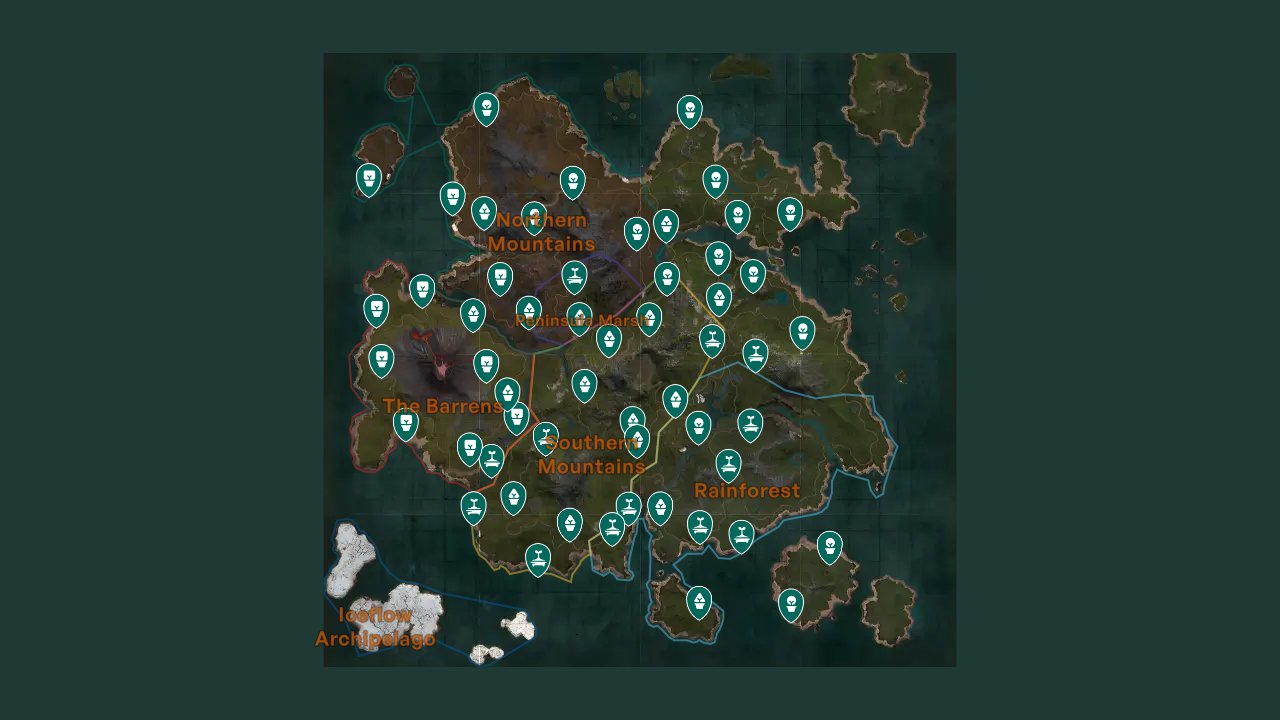
Farm Area locations in Myth Of Empires serve as the foundation for sustainable food production and agricultural development across your territory. These fertile zones provide essential resources for feeding your population and supporting large-scale settlements.
The Myth Of Empires Interactive Map helps you identify optimal farming locations by displaying all available agricultural areas with precise coordinates. Each marker reveals soil conditions, crop compatibility, and proximity to water sources, allowing you to plan efficient farming operations that support your empire’s growth.

What Farm Area Are Used For
Farm Area locations enable sustainable food production and resource generation essential for maintaining large populations and expanding your empire’s influence across the game world.
- Establish crop fields for wheat, rice, and other staple foods
- Generate renewable food sources to support growing settlements
- Create agricultural infrastructure for long-term territory development
- Support livestock operations and animal husbandry activities
- Produce trade goods and surplus resources for economic expansion
Farm Area Types
The map displays four distinct farming environments, each suited for different crops and agricultural strategies based on soil composition and water availability.
Paddy
Paddy fields represent flooded agricultural areas specifically designed for rice cultivation in Myth Of Empires. These water-saturated zones provide the ideal growing conditions for rice crops, which serve as a primary food source for large populations. Look for these locations near rivers, lakes, and other natural water sources.
Dry Farmland
Dry Farmland offers well-drained soil perfect for growing wheat, vegetables, and other crops that thrive in standard moisture conditions. These versatile farming areas typically yield consistent harvests without requiring extensive irrigation systems. They’re commonly found in plains and gently rolling terrain throughout the game world.
Wet Farmland
Wet Farmland provides naturally moist soil conditions ideal for crops requiring higher water content during growth cycles. These areas often produce superior yields compared to standard farming zones and support diverse crop rotations. They’re frequently located in lowland areas and river valleys with natural drainage.
Sandy Farmland
Sandy Farmland features well-draining sandy soil that supports specific crop types adapted to these conditions. While these areas may require different farming techniques, they offer unique agricultural opportunities and often remain productive during varying weather conditions. They’re typically found in coastal regions and certain inland areas with sandy deposits.
How to Use the Map Efficiently
Strategic Farm Area selection requires evaluating soil types, water access, and proximity to your existing settlements and trade routes.
- Prioritize Farm Area locations near your main settlements to minimize food transport distances
- Identify clusters of different farmland types to support diverse crop rotation systems
- Check proximity to water sources when planning irrigation for dry farming areas
- Mark farmland areas along established trade routes for surplus crop distribution
- Scout for Farm Area locations in contested territories before establishing claims
- Plan farming operations around seasonal weather patterns affecting different soil types
Farm Area Locations Table
Compare farming zone characteristics to select optimal agricultural development sites.
| Type | Primary Crops | Water Requirements |
|---|---|---|
| Paddy | Rice, aquatic crops | Constant flooding required |
| Dry Farmland | Wheat, vegetables | Moderate irrigation |
| Wet Farmland | Root crops, grains | Natural moisture sufficient |
| Sandy Farmland | Hardy crops, herbs | Drought-tolerant varieties |
Tips for Farm Area Hunting
- Survey multiple Farm Area types before committing to large-scale agricultural development
- Establish farming operations near fast-travel points for efficient resource management
- Consider defensive positioning when selecting farmland in contested regions
- Test soil productivity with small crops before expanding farming infrastructure
- Plan Farm Area layouts to accommodate future settlement expansion and road networks
- Coordinate with alliance members to avoid overlapping farming territories
FAQs
Can you change Farm Area soil types after claiming territory?
No, Farm Area soil types are fixed environmental features that cannot be modified. You must work with existing soil conditions or relocate farming operations to different areas.
How close should Farm Area be to settlements?
Ideally, Farm Area locations should be within reasonable walking distance of your main settlements to minimize food transport time and reduce vulnerability to raids during harvest transport.
Do different Farm Area types have seasonal productivity variations?
Yes, farming productivity varies by season and soil type. Paddy fields excel during wet seasons while sandy farmland maintains more consistent yields across different weather conditions.
Can multiple players use the same Farm Area location?
Farm Area access depends on territorial control and server rules. Generally, whoever controls the territory containing the farmland has exclusive farming rights in that area.
Credit: Myth Of Empires by Wand