All Item Locations in Crimson Desert
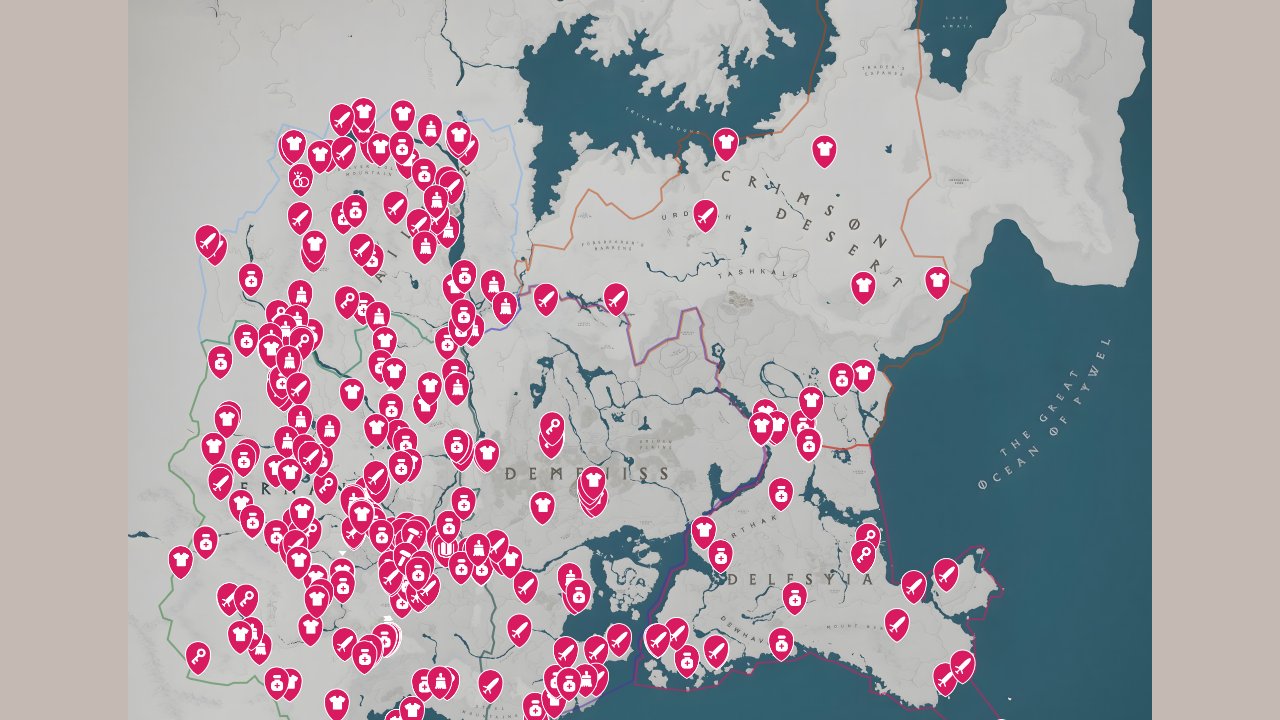
Items in Crimson Desert form the backbone of your character progression and exploration rewards. These collectibles range from powerful weapons and protective armor to essential consumables and mysterious keys that unlock hidden areas throughout the vast open world.
The Crimson Desert Interactive Map filters all item locations into clear categories, letting you plan efficient collection routes based on your immediate needs. Whether you’re hunting for upgrade materials or seeking rare artifacts, this focused view eliminates guesswork and maximizes your exploration time.
What Items Are Used For
Items serve as the primary means of character advancement and world interaction in Crimson Desert. They provide combat effectiveness, unlock story progression, and enable deeper exploration of the game’s interconnected regions.
- Equipment upgrades through weapons, armor, and accessories that boost combat capabilities
- Health restoration and temporary buffs via consumable elixirs and potions
- Access to locked areas and story content through specific keys and tools
- Character customization options with dyes and cosmetic modifications
- Lore expansion through reading materials that reveal world history and secrets
Items Types
The map organizes items into eight distinct categories, each serving specific gameplay functions and found in different environmental contexts throughout the world.
Weapons
Melee and ranged combat tools that define your fighting style and damage output. These items often appear in enemy camps, ancient ruins, and as rewards for completing challenging encounters. Higher-tier weapons typically require exploration of dangerous territories or defeating powerful bosses.
Elixir
Consumable potions that restore health, mana, or provide temporary stat boosts during combat and exploration. Alchemical shops, hidden caches, and defeated enemies commonly drop these essential survival tools. Different elixir types offer varying recovery rates and duration effects.
Key
Special items that unlock doors, chests, and restricted areas throughout the world. These crucial progression tools are often quest rewards or found near the locks they open. Each key typically serves a specific purpose tied to main story beats or optional content.
Armor
Defensive equipment that reduces incoming damage and may provide resistance to environmental hazards. Armor pieces are frequently discovered in military outposts, treasure vaults, and as drops from elite enemies. Sets often provide bonus effects when worn together.
Tool
Utility items that enable interaction with specific environmental elements or crafting systems. Tools allow access to previously unreachable areas, resource gathering, or puzzle solving. They represent essential progression gates that expand your exploration capabilities.
Dye
Cosmetic modification items that change the appearance of equipment without affecting stats. These collectibles add personalization options and are typically found in merchant locations, hidden stashes, or as rewards for side activities. Each dye offers unique color combinations for gear customization.
Accessories
Supplementary equipment like rings, amulets, and charms that provide passive bonuses or special abilities. These items fine-tune character builds and often grant unique effects not available through weapons or armor. Rare accessories may require completing specific quest chains.
Reading Material
Books, scrolls, and documents that contain world lore, quest hints, or crafting recipes. These narrative items deepen understanding of Crimson Desert’s history and cultures while sometimes providing practical gameplay benefits. Libraries, scholarly locations, and ancient sites commonly house these materials.
How to Use the Map Efficiently
Strategic item collection requires understanding spawn patterns, regional concentrations, and the relationship between item types and specific area themes.
- Target military compounds and bandit camps for weapons and armor concentrations
- Visit alchemical districts and herb gardens for elixir and crafting material clusters
- Check administrative buildings and noble quarters for keys and reading materials
- Explore merchant districts for tools, dyes, and accessories before venturing into wilderness areas
- Use fast-travel points to create circular collection routes that minimize backtracking
- Prioritize story-critical keys and tools before focusing on equipment upgrades or cosmetics
Items Locations Table
Each item type appears in specific environmental contexts that match their narrative and gameplay purpose.
| Type | What You Get | Notable Detail |
|---|---|---|
| Weapons | Combat equipment and damage tools | Often found in military camps and after boss fights |
| Elixir | Health potions and temporary buffs | Common near alchemical shops and herb gardens |
| Key | Access items for locked content | Usually located near their corresponding locks |
| Armor | Defensive gear and protective equipment | Frequently drops from elite enemies and treasure vaults |
| Tool | Utility items for world interaction | Essential for accessing previously blocked areas |
| Dye | Equipment coloring and customization | Scattered in merchant areas and hidden caches |
| Accessories | Passive bonus items and special effects | Rare finds requiring specific quest completion |
| Reading Material | Lore books and crafting recipes | Concentrated in libraries and scholarly locations |
Tips for Items Hunting
- Clear enemy camps systematically to maximize weapon and armor drops while exploring
- Return to previously visited areas after story progression as new items may spawn
- Check behind destructible environmental elements that might hide secret item caches
- Talk to NPCs regularly as they may provide hints about nearby valuable item locations
- Combine item hunting with other objectives to make exploration more rewarding
- Pay attention to visual cues like unusual architecture or lighting that often mark hidden treasures
FAQs
Do items respawn after collection in Crimson Desert?
Most items are permanently collected, but certain consumables like elixirs may respawn after specific time periods or story events. Unique weapons and keys typically appear only once per playthrough.
Are there items that can only be found in specific weather conditions?
Some rare items and reading materials become accessible only during certain weather patterns or time-of-day conditions. Storm-related events may reveal hidden caches or unlock previously inaccessible areas.
Can I trade or sell unwanted items to other players?
Crimson Desert features both NPC merchants for selling excess items and potential player trading systems for certain item categories. Quest-critical keys and story items typically cannot be traded or sold.
Which items should I prioritize collecting early in the game?
Focus on elixirs for survivability, basic weapons for combat effectiveness, and any keys you encounter as they often gate important content. Tools and reading materials provide long-term benefits worth collecting when convenient.
Credit: Crimson Desert by Wand