All Collectible Locations: Resident Evil Village Guide
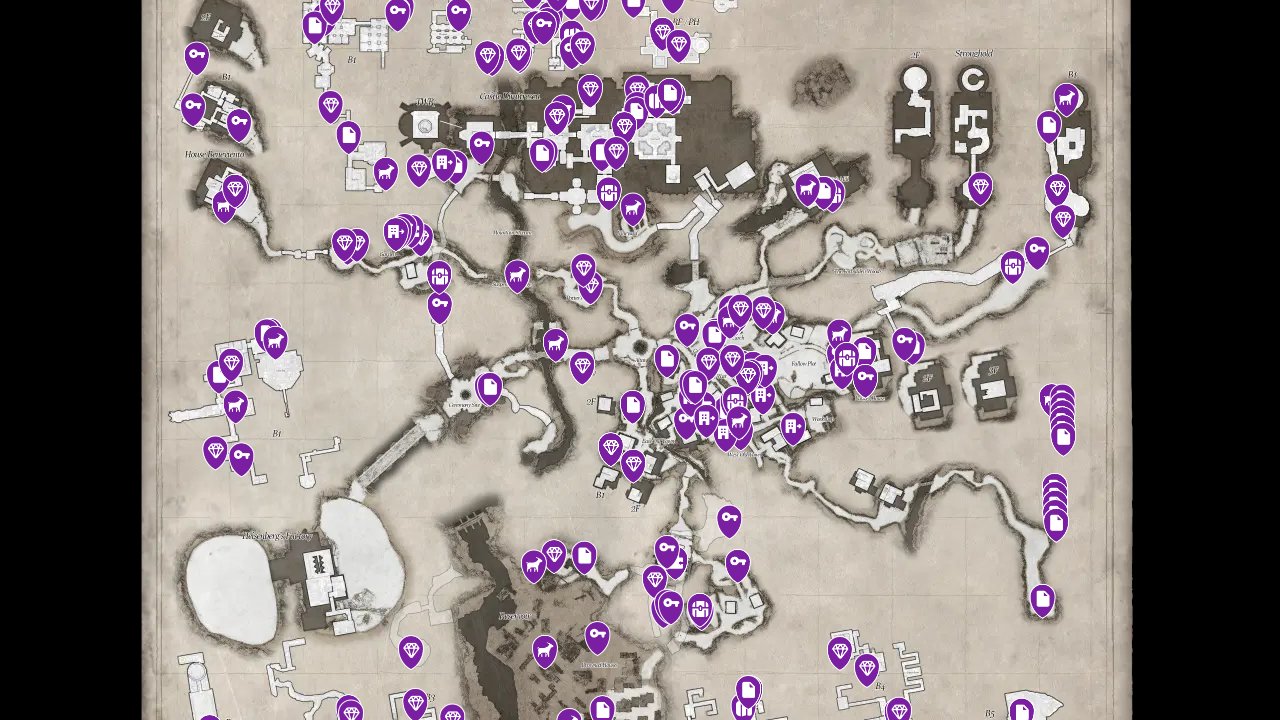
Collectibles in Resident Evil Village are scattered throughout the dark villages, foreboding castles, and twisted landscapes of this survival horror masterpiece. These items range from valuable treasures that boost your finances to crucial story documents that flesh out the game’s rich lore.
The Resident Evil Village Interactive Map streamlines your collection efforts by marking every collectible location across all areas. Whether you’re hunting for rare treasures to sell the Duke or tracking down every file to complete the story, this filtered view eliminates guesswork and helps you plan efficient routes through each dangerous region.

What Collectibles Are Used For
Collectibles serve multiple essential functions in Resident Evil Village, from generating currency for weapon upgrades to unlocking story content and completing achievement requirements.
- Generate Lei currency by selling treasures and combinable items to the Duke
- Unlock story details and background lore through files and documents
- Complete achievement requirements for 100% game completion
- Access locked areas and progress story sequences with key items
- Enhance your understanding of the game’s world and characters
Collectibles Types
The map tracks eight distinct types of collectibles, each serving specific gameplay functions in Resident Evil Village. Understanding what each type offers helps you prioritize your collection routes.
File
Files contain story documents, character notes, and lore entries that expand the game’s narrative. These text-based collectibles provide crucial background information about the village’s history, the Four Lords, and Ethan’s predicament. Reading files often reveals hints about puzzle solutions and hidden areas.
Goat of Warding
Goats of Warding are small wooden figurines hidden throughout the game world that can be destroyed for completion rewards. Finding and breaking all 20 goats unlocks achievements and contributes to 100% completion. These collectibles require careful observation as they’re often tucked into shadowy corners or elevated positions.
Key Item
Key items are story-critical objects required to progress through locked doors, activate machinery, or solve environmental puzzles. These collectibles directly gate your advancement through the game’s areas. Examples include ornate keys, mechanical parts, and ceremonial objects needed for specific sequences.
Labyrinth Puzzle
Labyrinth puzzles are intricate mechanical contraptions that reward valuable treasures when solved correctly. These collectibles combine puzzle-solving with treasure hunting, often yielding high-value items worth significant Lei. Each labyrinth requires careful manipulation to guide a ball through a maze to the exit.
Map
Maps reveal the layout of each major area and mark important locations on your in-game map. Collecting these items early in each region significantly improves navigation and helps you locate other collectibles more efficiently. Maps are typically found near area entrances or in prominent buildings.
Outhouse
Outhouses contain hidden treasures and supplies, making them valuable resource locations. These structures are scattered throughout outdoor areas and often house ammunition, healing items, or valuable trinkets. Some outhouses require keys or specific timing to access their contents safely.
Treasure
Treasures are valuable items that exist solely to be sold to the Duke for Lei currency. These collectibles range from simple jewelry to ornate artifacts, with some requiring combination with other items to maximize their selling price. Treasures form the backbone of your economic system for purchasing weapons and upgrades.
Treasure Chest
Treasure chests contain multiple valuable items, weapons, or weapon parts in secured containers. These collectibles often require keys or puzzle solutions to unlock but reward significant Lei value or gameplay advantages. Chests are typically found in hidden rooms or well-defended locations.
How to Use the Map Efficiently
Resident Evil Village’s interconnected areas and backtracking opportunities make route planning essential for comprehensive collectible hunting.
- Prioritize map collectibles first to reveal area layouts and other item locations
- Clear entire regions systematically rather than jumping between areas randomly
- Return to early areas after gaining new tools or keys that unlock previously inaccessible locations
- Focus on treasures and key items during your first playthrough, then return for files and goats
- Use the Duke’s shop locations as natural waypoints for planning collection routes
- Save labyrinth puzzles for when you have adequate time to solve them without combat pressure
Collectibles Locations Table
Each collectible type offers distinct rewards and serves different gameplay functions.
| Type | What You Get | Notable Detail |
|---|---|---|
| File | Story lore and puzzle hints | Essential for understanding game narrative |
| Goat of Warding | Achievement progress | 20 total goats hidden throughout game |
| Key Item | Story progression access | Required for unlocking doors and areas |
| Labyrinth Puzzle | High-value treasure rewards | Mechanical puzzles requiring precise manipulation |
| Map | Area layout revelation | Critical for efficient navigation |
| Outhouse | Hidden supplies and treasures | Often contain ammunition and healing items |
| Treasure | Lei currency when sold | Some combine with others for higher value |
| Treasure Chest | Multiple valuable items | Usually require keys or puzzle solutions |
Tips for Collectibles Hunting
- Always grab area maps immediately upon entering new regions to reveal collectible locations
- Check every drawer, cabinet, and container as many contain small treasures or files
- Look up and down frequently since goats and chests are often placed in elevated or basement locations
- Combine treasure items before selling them to the Duke for maximum Lei value
- Return to previous areas after boss fights as new paths often open up
- Use a systematic clearing pattern for each room to avoid missing hidden items
FAQs
Can I miss any collectibles permanently in Resident Evil Village?
Most collectibles can be obtained throughout the game, but some key items become unavailable after certain story progression points. Files and treasures remain accessible for collection even after completing the main story.
How many Goats of Warding are there total?
There are 20 Goats of Warding scattered throughout Resident Evil Village. Destroying all 20 goats unlocks the Cynic achievement and contributes to 100% game completion.
Should I sell treasures immediately or combine them first?
Always check if treasures can be combined with other items before selling them to the Duke. Combined treasures sell for significantly more Lei than their individual components, maximizing your purchasing power for weapons and upgrades.
Do I need to collect all files to understand the story?
While not required for basic story comprehension, collecting all files provides essential background information about the Four Lords, village history, and character motivations that significantly enhance the narrative experience.
Credit: Resident Evil Village by Wand